
No products in the cart.
OVERVIEW
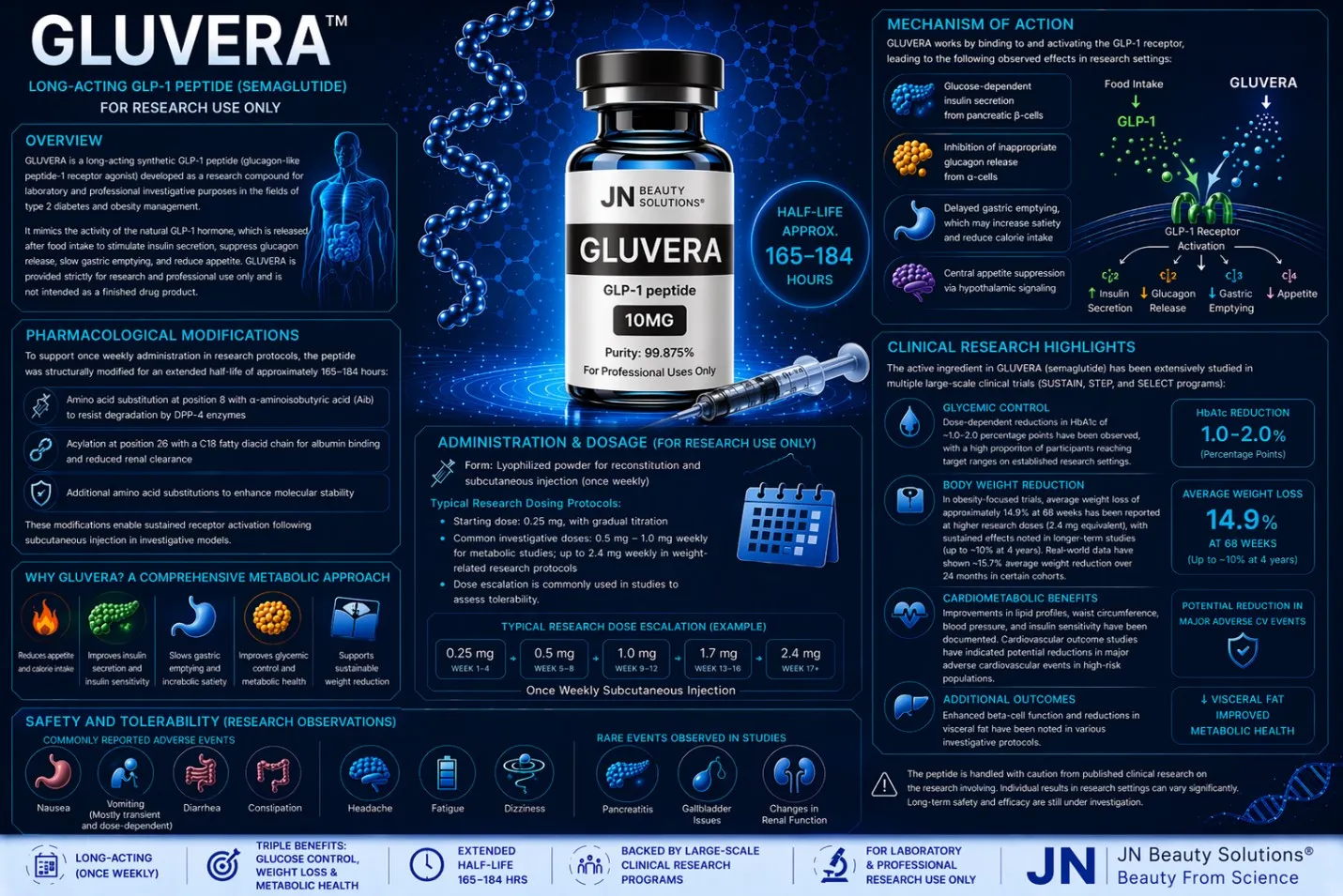
GLUVERA is a long-acting synthetic GLP-1 peptide (glucagon-like peptide-1 receptor agonist) developed as a research compound for laboratory and professional investigative purposes in the fields of type 2 diabetes and obesity management.
It mimics the activity of the natural GLP-1 hormone, which is released after food intake to stimulate insulin secretion, suppress glucagon release, slow gastric emptying, and reduce appetite. GLUVERA is provided strictly for research and professional use only and is not intended as a finished drug product.
MECHANISM OF ACTION
GLUVERA works by binding to and activating the GLP-1 receptor, leading to the following observed effects in research settings:
- Glucose-dependent insulin secretion from pancreatic β-cells
- Inhibition of inappropriate glucagon release from α-cells
- Delayed gastric emptying, which may increase satiety and reduce caloric intake
- Central appetite suppression via hypothalamic signaling
These combined actions have been associated in clinical investigations with improved glycemic parameters and body weight reduction.
PHARMACOLOGICAL MODIFICATIONS
To support once-weekly administration in research protocols, the peptide was structurally modified for an extended half-life of approximately 165–184 hours:
- Amino acid substitution at position 8 with α-aminoisobutyric acid (Aib) to resist degradation by DPP-4 enzymes
- Acylation at position 26 with a C18 fatty diacid chain for albumin binding and reduced renal clearance
- Additional amino acid substitutions to enhance molecular stability
These modifications enable sustained receptor activation following subcutaneous injection in investigative models.
CLINICAL RESEARCH HIGHLIGHTS
The active ingredient in GLUVERA (semaglutide) has been extensively studied in multiple large-scale clinical trials (SUSTAIN, STEP, and SELECT programs):
- Glycemic Control: Dose-dependent reductions in HbA1c of 1.0–2.0 percentage points have been observed, with a high proportion of participants reaching HbA1c targets in controlled research settings.
- Body Weight Reduction: In obesity-focused trials, average weight loss of approximately 14.9% at 68 weeks has been reported at higher research doses (2.4 mg equivalent), with sustained effects noted in longer-term studies (up to ~10% at 4 years). Real-world observational data have shown 15–17% average weight reduction over 24 months in certain cohorts.
- Cardiometabolic Benefits: Improvements in lipid profiles, waist circumference, blood pressure, and insulin sensitivity have been documented. Cardiovascular outcome studies have indicated potential reductions in major adverse cardiovascular events in high-risk populations.
- Additional Outcomes: Enhanced beta-cell function and reductions in visceral fat have been noted in various investigative protocols.
Important Note: All data above are derived from published clinical research on the semaglutide molecule. Individual results in research settings can vary significantly. Long-term safety and efficacy are still under investigation.
ADMINISTRATION & DOSAGE (For Research Use Only)
- Form: Lyophilized powder for reconstitution and subcutaneous injection (once weekly)
- Typical Research Dosing Protocols:
- Starting dose: 0.25 mg, with gradual titration
- Common investigative doses: 0.5 mg – 1.0 mg weekly for metabolic studies; up to 2.4 mg weekly in weight-related research protocols
- Dose escalation is commonly used in studies to assess tolerability.
SAFETY AND TOLERABILITY (Research Observations)
Commonly reported adverse events in clinical investigations include:
- Gastrointestinal effects such as nausea, vomiting, diarrhea, and constipation (mostly transient and dose-dependent)
- Headache, fatigue, or dizziness
Rare events observed in studies include pancreatitis, gallbladder issues, and changes in renal function. The peptide is handled with caution in research involving subjects with a history of medullary thyroid carcinoma (MTC), MEN2, pancreatitis, or severe gastrointestinal disorders.
IMPORTANT DISCLAIMER – RESEARCH USE ONLY
- GLUVERA is a research peptide provided strictly for laboratory research, analytical, or professional compounding purposes only.
- It is NOT an FDA-approved drug and has not been evaluated by the FDA or any other regulatory authority for safety, efficacy, or use in humans as a therapeutic product. It is not intended for human consumption, self-administration, or as a substitute for any approved medication such as Ozempic or Wegovy.
- All information in this document is for educational and reference purposes only, based on publicly available scientific literature. JN Beauty Solutions® does not provide medical advice. Any use in humans must be conducted under the supervision of a qualified healthcare professional in compliance with all applicable laws and ethical guidelines for investigational compounds.
- Purchasers must confirm they are qualified researchers or licensed professionals authorized to handle research peptides. We reserve the right to refuse sales to any party who cannot demonstrate legitimate research intent.
CONCLUSION
GLUVERA represents a high-purity GLP-1 peptide suitable for advanced research into metabolic pathways, glycemic control, and weight management mechanisms. With its engineered long-acting profile, it serves as a valuable tool for laboratories and professionals investigating next-generation peptide therapies.
For more information or to inquire about GLUVERA for research purposes, please contact:
JN Beauty Solutions®
Beauty From Science
#BeautySolutionsUSA #JnBeautySolutions #GLUVERA #GLP1Peptide #ResearchPeptide #SemaglutideResearch
