
No products in the cart.
OVERVIEW
SYLINA is a synthetic dual-incretin GLP-1 & GIP peptide designed as a research compound for investigative studies in the areas of type 2 diabetes and obesity. It combines the activities of glucose-dependent insulinotropic polypeptide (GIP) and glucagon-like peptide-1 (GLP-1) into a single molecule, offering a synergistic approach to exploring improved glycemic parameters and substantial weight reduction in research settings.
SYLINA is provided strictly for research and professional use only and is not intended as a finished therapeutic product.
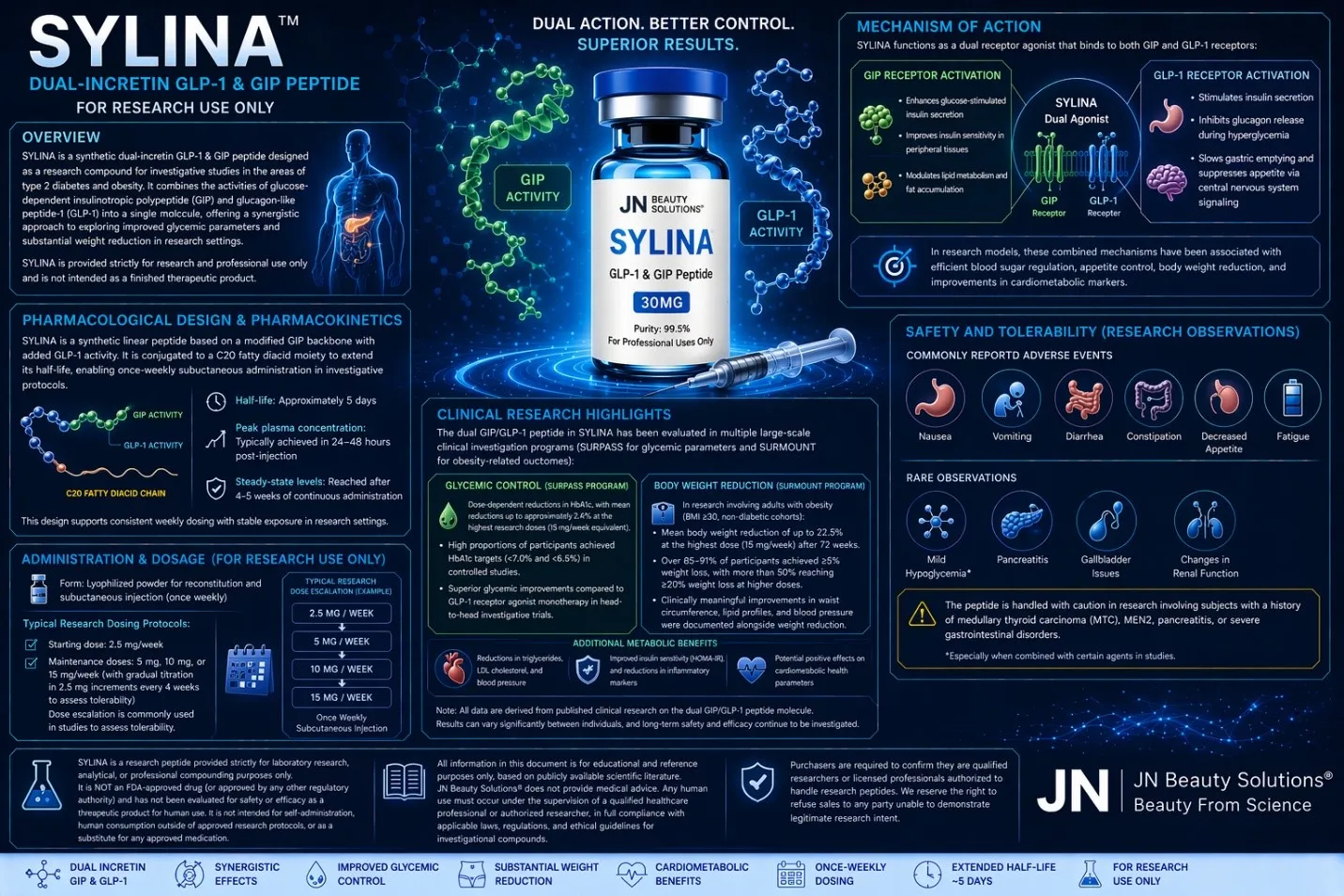
MECHANISM OF ACTION
SYLINA functions as a dual receptor agonist that binds to both GIP and GLP-1 receptors:
- GIP Receptor Activation
- Enhances glucose-stimulated insulin secretion
- Improves insulin sensitivity in peripheral tissues
- Modulates lipid metabolism and fat accumulation
- GLP-1 Receptor Activation
- Stimulates insulin secretion
- Inhibits glucagon release during hyperglycemia
- Slows gastric emptying and suppresses appetite via central nervous system signaling
In research models, these combined mechanisms have been associated with efficient blood sugar regulation, appetite control, body weight reduction, and improvements in cardiometabolic markers.
PHARMACOLOGICAL DESIGN & PHARMACOKINETICS
SYLINA is a synthetic linear peptide based on a modified GIP backbone with added GLP-1 activity. It is conjugated to a C20 fatty diacid moiety to extend its half-life, enabling once-weekly subcutaneous administration in investigative protocols.
- Half-life: Approximately 5 days
- Peak plasma concentration: Typically achieved in 24–48 hours post-injection
- Steady-state levels: Reached after 4–5 weeks of continuous administration
This design supports consistent weekly dosing with stable exposure in research settings.
CLINICAL RESEARCH HIGHLIGHTS
The dual GIP/GLP-1 peptide in SYLINA has been evaluated in multiple large-scale clinical investigation programs (SURPASS for glycemic parameters and SURMOUNT for obesity-related outcomes):
- Glycemic Control (SURPASS Program)
- Dose-dependent reductions in HbA1c, with mean reductions up to approximately 2.4% observed at the highest research doses (15 mg/week equivalent).
- High proportions of participants achieved HbA1c targets (<7.0% and <6.5%) in controlled studies.
- Superior glycemic improvements compared to GLP-1 receptor agonist monotherapy in head-to-head investigative trials.
- Body Weight Reduction (SURMOUNT Program)
In research involving adults with obesity (BMI ≥30, non-diabetic cohorts):
- Mean body weight reduction of up to 22.5% at the highest dose (15 mg/week) after 72 weeks.
- Over 85–91% of participants achieved ≥5% weight loss, with more than 50% reaching ≥20% weight loss at higher doses.
- Clinically meaningful improvements in waist circumference, lipid profiles, and blood pressure were documented alongside weight reduction.
ADDITIONAL METABOLIC BENEFITS
Research observations include:
- Reductions in triglycerides, LDL cholesterol, and blood pressure
- Improved insulin sensitivity (HOMA-IR) and reductions in inflammatory markers
- Potential positive effects on cardiometabolic health parameters
Note: All data are derived from published clinical research on the dual GIP/GLP-1 peptide molecule. Results can vary significantly between individuals, and long-term safety and efficacy continue to be investigated.
ADMINISTRATION & DOSAGE (For Research Use Only)
- Form: Lyophilized powder for reconstitution and subcutaneous injection (once weekly)
- Typical Research Dosing Protocols:
- Starting dose: 2.5 mg/week
- Maintenance doses: 5 mg, 10 mg, or 15 mg/week (with gradual titration in 2.5 mg increments every 4 weeks to assess tolerability)
SAFETY AND TOLERABILITY (Research Observations)
- Commonly reported adverse events in clinical investigations include:
- Gastrointestinal symptoms: nausea, vomiting, diarrhea (primarily during dose escalation)
- Injection-site reactions, fatigue, or decreased appetite
Rare observations include mild hypoglycemia (especially when combined with certain agents in studies), pancreatitis, or gallbladder-related issues. The peptide is handled with caution in research involving subjects with a history of medullary thyroid carcinoma (MTC), MEN2, pancreatitis, or severe gastrointestinal disorders.
IMPORTANT DISCLAIMER – RESEARCH USE ONLY
SYLINA is a research peptide provided strictly for laboratory research, analytical, or professional compounding purposes only.
It is NOT an FDA-approved drug (or approved by any other regulatory authority) and has not been evaluated for safety or efficacy as a therapeutic product for human use. It is not intended for self-administration, human consumption outside of approved research protocols, or as a substitute for any approved medication.
All information in this document is for educational and reference purposes only, based on publicly available scientific literature. JN Beauty Solutions® does not provide medical advice. Any human use must occur under the supervision of a qualified healthcare professional or authorized researcher, in full compliance with applicable laws, regulations, and ethical guidelines for investigational compounds.
Purchasers are required to confirm they are qualified researchers or licensed professionals authorized to handle research peptides. We reserve the right to refuse sales to any party unable to demonstrate legitimate research intent.
CONCLUSION
SYLINA represents an advanced GLP-1 & GIP peptide suitable for research into dual-incretin pathways, glycemic regulation, and weight management mechanisms. Its engineered dual-agonist profile makes it a valuable tool for laboratories and professionals exploring next-generation metabolic peptide therapies.
For more information or to inquire about SYLINA, please contact:
JN Beauty Solutions®
Beauty From Science
#BeautySolutionsUSA #JnBeautySolutions #SYLINA #GLP1GIPPeptide #DualAgonistPeptide #ResearchPeptide
